
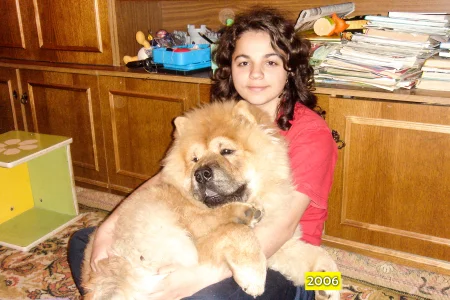
The very first dog I trained and titled was a chow-chow. I achieved success with him not because I was a naturally gifted handler, but because I stepped into the dog world without knowing that there are opinions about what certain breeds can and cannot do, and that, apparently, you cannot train and title a chow.
The main difficulty was a complete lack of motivation. He would sometimes be interested in cheese, but only if it was easy to get. Toys? No interest whatsoever. On the flip side, he was rock-stable: no reactivity, no aggression, no anxiety. You could take this dog anywhere and he would perform consistently, as long as you figured out how to make him care enough to bother.
I achieved what I was looking for, and immediately drew the wrong conclusion from it. I assumed that other dogs were more or less like him. Boy, was I wrong.
There are over 300 dog breeds, organized into groups based on the function they were bred to perform. Herding dogs, sporting dogs, working dogs, terriers, hounds, toys, and then there is the non-sporting group, which is essentially where all the dogs that did not quite fit anywhere else ended up, ranging from dalmatians to poodles. While there is some personality consistency within most groups, the non-sporting group is a grab-bag of wildly different animals that happen to share a classification.
To illustrate how dramatically dogs can differ across these groups: the mental sensitivity spectrum spans from the border collie, who adjusts its behaviour to the slightest variation in your voice or facial expression, to the chow, who only cares about such mundane things insofar as it suits its desire in a specific moment in time. These are not the same dog wearing different coats.
And yet.
I find it genuinely telling when people who have primarily worked with sensitive border collies and sweet, drivey, generally compliant labs proclaim that corrections and punishment have no place in dog training.
I find it equally telling when people who work exclusively with tough dogs insist that every single dog benefits from hard handling and training tools.
Train at least one dog from each category. Train a few from the non-sporting group while you are at it. Then come back and tell us how exactly you are planning to train a two-year-old human-aggressive rottweiler owned by a 70-year-old lady using only a harness and positive reinforcement.
While you are at it, throw in a chow-chow who couldn't care less about your treats, your affection, or your toys.
And then tell us how well that highly anxious borzoi or hyper-sensitive border collie took to a prong collar and a hard correction.
So what is "balanced" training, actually?
It is not about finding a balance between positive reinforcement and punishment. It is about finding balance in yourself, in your emotions, your assumptions, and your willingness to adjust the moment you see that something is not working. It means not planting your flag at either end of the spectrum and staying there. It means moving freely within it, and finding what a specific dog, in front of you, right now, actually needs.
That is the only balance worth talking about.