
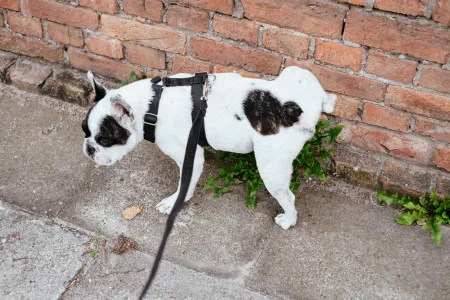
There’s a fire hydrant next to the spot where my kid’s school bus stops.
This morning, as I was waiting for the bus—thinking random thoughts and glancing in its direction—my eyes landed on a beautiful Saint Bernard casually walking its owner toward me. The dog moved slowly, methodically sniffing trees and grass, marking as he went. When he reached the hydrant, he gave it an especially thorough sniff… then lifted his leg and produced a long, proud stream of urine.
There was something oddly insulting about this huge, majestic dog peeing on a hydrant. It reminded me of my time working at a vet clinic, where I had to wipe dog pee off vertical surfaces multiple times a day.
It also brought back another memory—pushing my stroller through a busy downtown, waiting to cross the street, when a small dog casually peed on one of the stroller wheels.
The common denominator? The owner’s complete lack of awareness or concern about where their dog pees. Do they even realize this isn’t normal?
Marking is a behavior—just like barking or leash pulling—one that can and should be shaped and controlled. Letting your dog mark fire hydrants, store counters, or baby strollers isn’t just rude; it creates an obsessive, obnoxious habit. In the end, it backfires—marking becomes your dog’s most thrilling daily activity, and you become merely the leash attachment.
The solution is simple: don’t let it happen. Learn to read your dog; recognize the body language that precedes marking; redirect or correct it. At the same time, teach your dog to pee on command—and use that command to make clear where it’s allowed and where it’s absolutely not.
Communicate. Practice. Persist.
Hydrants and baby strollers? Really? The human race can do better than that.