
After reading through some of the heated methodological battles, I’ve come to the conclusion that several key points tend to spark most of the disputes:
1. Whether or not to push the dog to do something it fears
2. A complete misunderstanding of how this “push” is applied and what role tools can play in it (naysayers often claim tools are used to inflict pain and instill fear)
3. The consequences of using any form of pressure
I’d like to start with the first point, focusing specifically on anxious and fearful dogs.
Whenever a dog shows fear of something, the most common—and natural—reaction from owners is to reassure the dog that everything is fine, and then attempt desensitization and counter-conditioning while keeping the dog as far from triggers as possible.
This approach can work if the dog is relatively environmentally stable. However, if it’s not, things often get progressively worse.
Eventually, even walking out the door becomes a challenge, and the concept of “thresholds” stops being applicable.
This is usually the point at which I meet people. I help them get where they need to be, but it would have been so much easier if they had known how to address fear and anxiety from the start.
A pivotal concept that often escapes dog owners is this: nervous and insecure dogs don’t benefit from verbal reassurance. They do need help overcoming their insecurities, but not by keeping fears at a distance in the hope of getting closer one day. A dog’s life is short, and that day may never come.
Likewise, environmentally unstable dogs tend to become even more unstable when given the option to avoid what they perceive as scary.
So what does an insecure dog need? Desensitization and counter-conditioning—but applied through action and confident guidance, not avoidance or endless threshold management. You acknowledge the fear, but you don’t organize the dog’s entire life around avoiding it.
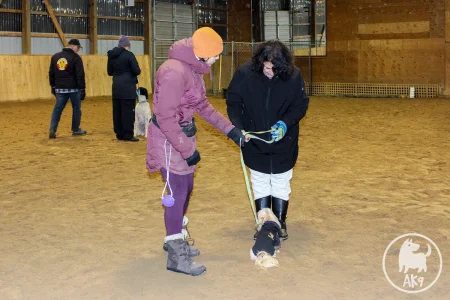
Show the dog what you want. Make unwanted behaviour difficult or impossible to perform. Reinforce the behaviour you do want, but in action, not from a distance in some hypothetical scenario. This is not about overwhelming the dog, but about providing clear direction and follow-through in real situations.
Then go about your day with your dog, and enjoy it.
Stop indulging fear under the banner of being “understanding.” Your dog looks to you for guidance, and if your response shifts to “aww, it’s okay, it was just a leaf”—something you don’t do in most other situations—you risk signaling that the leaf is actually something significant and potentially threatening.