
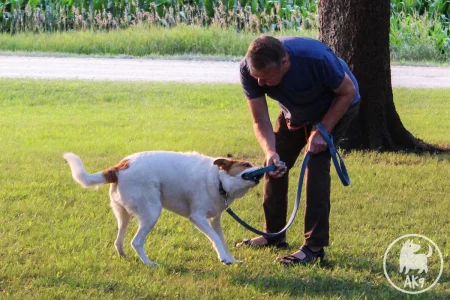
A house, a couple of kids, and a dog, all playing joyfully in a backyard. The ultimate life goal, the dream, the manifestation of happiness.
You have seen it a million times, right? In TV commercials, in movies and shows, in cartoons, in YouTube videos. Every fathomable and unfathomable form of media has tried to tap into this idyllic image of a family.
Here is what is wrong with it. Not that it is impossible, but that it plants fallacious seeds in people's heads. Seeds that grow into a full-blown delusion about the work with the dog and the kids that must happen behind the scenes; work that is never featured in those channels - suggesting instead that these things simply happen naturally.
They do not.
First, a reality check: many dogs do not like children. Children behave differently, talk differently, move differently. They lack impulse control, do not possess good judgment of a situation, and can easily, although often unintentionally, hurt a dog.
The problem with dog owners who believe in the dog-kids-house framework is that they tend to romanticize dog-children relationships, believing that a dog will be naturally gentle around their kids and able to assess a situation where a child does something unpleasant to it while still exercising calmness in response.
Dogs do not do that. They are animals, and no matter how gentle they might be, they will discipline anyone who behaves unfairly toward them, especially someone on the same hierarchical level as they are.
This discipline will often look like a growl and a snap, and sometimes, if a situation is left unaddressed for long enough, a dog will bite.
Most often, I meet people after their dog has already growled and snapped, and by then they are terrified that their dog is aggressive and are considering rehoming it.
While the concern is valid and understandable, everyone tends to forget how it started: with people believing that a dog will be naturally gentle around kids. A belief shaped by romanticized relationships seen so often on media channels that they come to be mistaken for truth, and then by the logical assumption that something must be fundamentally wrong with the dog because it does not adhere to those images.
What is actually wrong is the expectations.
You cannot expect a dog who was never taught what is allowed and not allowed around children to exercise kid-appropriate judgment. You cannot expect kids, who have not been taught to understand their dog, to be anything but oblivious around it.
Teach the kids. Teach the dog. Most importantly, no matter how well trained the kids and the dog are, never leave them alone together, and always be ready to intervene.
And let go of the romanticized fantasy. It was created for monetary purposes, not because it holds a grain of truth.