
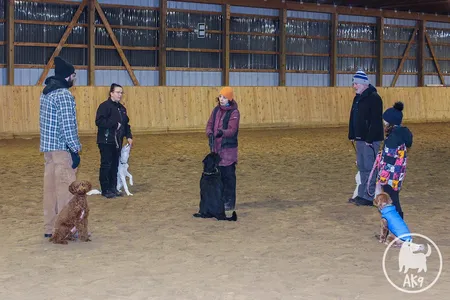
Most of our clients are fantastic. They trust the process, practice what they learn, and as a result, they see real progress with their dogs.
But every so often, we meet people who expect that simply showing up to a group class will somehow “fix” things. It won’t.
Dog training—like any skill—relies on two types of knowledge: the “what” and the “how.” Psychologists call these declarative and procedural knowledge.
The “what” is easy: reward your dog at the right time, use the leash correctly, apply clear cues. These are rules and concepts, and they can be explained in a class.
The “how” is different. It’s timing, feel, consistency, and awareness. It’s the ability to read your dog, adjust in the moment, and recreate success outside of a controlled environment. That only comes from experience, repetition, and practice. No one can hand it to you.
In class, we guide you through the “what” and help you apply it. That’s why things often look good in the moment.
But if you don’t put in the work outside of class—if you don’t practice, repeat, and build those skills in real-life situations—progress will stall. And at that point, there’s nothing a trainer can do to replace that effort.
We’re here to help—but your success ultimately depends on you.