
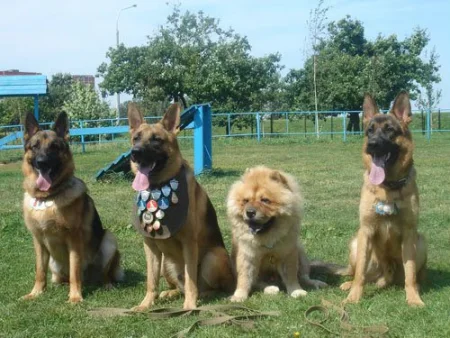
The question “Can my dog meet your dog?” makes a lot of people uncomfortable. Maybe they’re in the middle of something. Maybe they’re in a bad mood and just want to be left alone. Maybe their dog is reactive. And yet, they still feel bad about saying “No”—followed by the inevitable “Sorry.” But what exactly are they apologizing for, except for other people’s ignorance?
Everybody knows they need to “socialize” their dogs. Somewhere along the line, socialization—the process of learning to behave appropriately in society—got mistranslated into “let my dog meet every dog in the neighbourhood.” That interpretation has little to do with the word’s actual meaning.
Here’s the thing: the “society” in “socialization” refers to human society, not dog society. In human society, dogs are expected to remain calm around both people and other dogs. (In dog society—structured around a strict social hierarchy—this is largely true as well.) So it’s puzzling how anyone could expect a puppy, repeatedly encouraged to approach every person and every dog it sees, to develop calmness and neutrality. Where is that neutrality supposed to come from?
Neutrality is easier to understand when you consider things your dog typically ignores—like trees. Most dogs have zero interest in trees, other than to mark them. That’s partly because trees don’t move, sure—but more importantly, no one is encouraging their dog to approach every single tree during a walk. With people and other dogs, the logic should be the same.
The only real difference between trees and other dogs (or humans) is this: the outcome of those encouraged interactions can go one of two ways—and neither is ideal for you, the owner.
A dog with no genetic predisposition toward aggression (think sporting or hunting breeds) will likely love other dogs. It will be eager to greet them, play with them, and fully enjoy the experience. That’s great—except now, other dogs are a source of ultimate joy. Which means you’re not. Good luck teaching recall or building a reliable obedience routine when you’re competing with the thrill of a random play session.
A dog with a predisposition toward reactivity or aggression (think herding or working breeds), even if it starts off neutral, will likely grow to resent those constant forced interactions. If you keep insisting it meets every dog, it may eventually develop full-blown reactivity. Teaching neutrality after that becomes a long-term project—possibly a lifelong one.
Dogs don’t need dog friends. What they do need are meaningful relationships—but those relationships should be with you and your family, not with every stranger and every dog you pass on the street. By all means, socialize your dog, but do so by exposing it to all sorts of distractions while encouraging calmness and neutrality, not exuberance and excitement.